
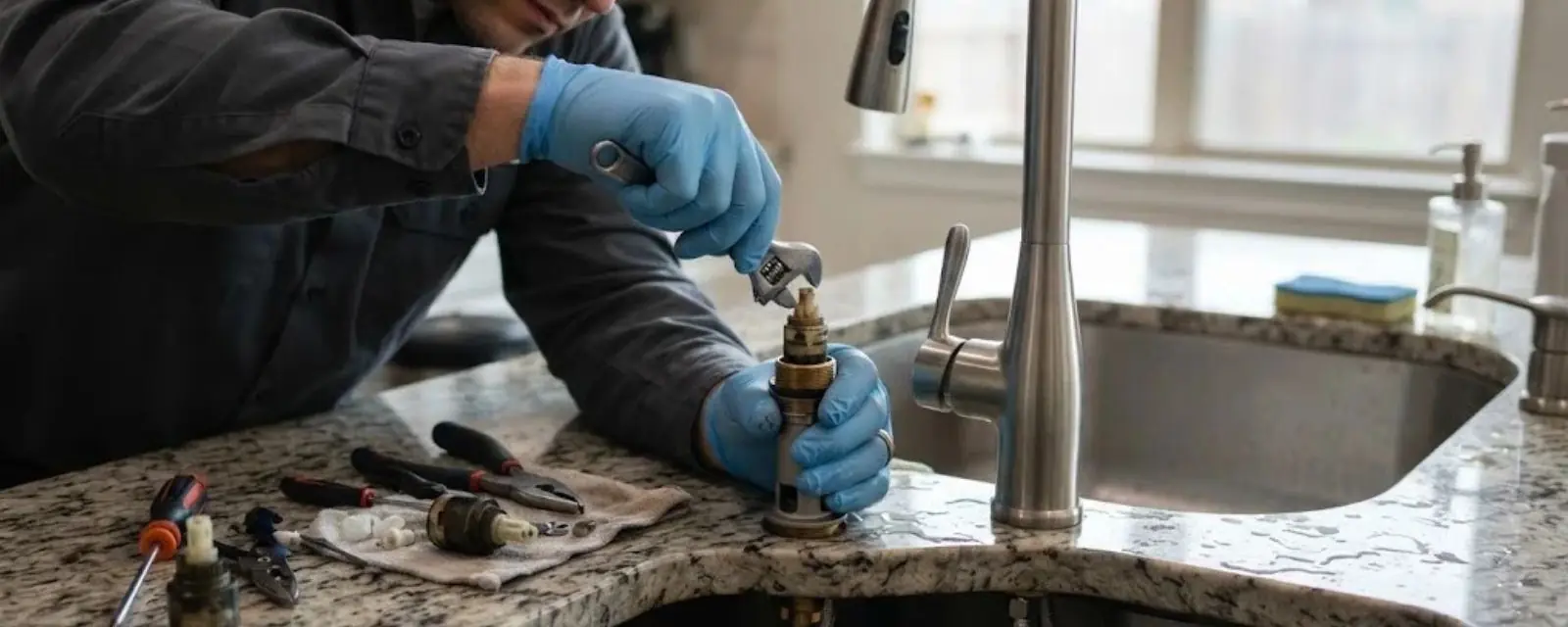
A bathroom sink looks simple, but it has two water supplies, a drain, a trap and a vent behind the wall. When something goes wrong, the symptom usually points to one part. This guide sorts the common problems, shows what you can try yourself and tells you when a plumber saves time.
A slow drain
Most slow bathroom sink drains are hair and soap scum caught in the pop-up stopper and just below it. Pull the stopper out, often by loosening a nut on the rod behind the faucet, and clean what is on it. Then use a small plastic drain tool to pull out what is below. Many drains clear after this.
Avoid chemical drain cleaners. They can damage pipes, they can burn skin and they leave dangerous standing water if the clog stays. If the sink still drains slowly, the blockage is deeper, and a cable is the next step. A bathroom sink drain is usually about 1.25 inches wide, so a small clog matters. See drain cleaning for the full approach.
A dripping faucet
A drip usually means a worn cartridge, washer or O-ring inside the faucet. The U.S. Environmental Protection Agency says a faucet that drips once a second can waste more than 3,000 gallons a year. Shut off the water at the valve under the sink, remove the handle, pull the cartridge and match it to a new one. Turning the water off first is important.
If the faucet is old or the finish is worn, replacing it can be easier than finding parts.
Leaks under the sink
Check with a dry paper towel. Run the water and touch the towel to each connection. The location tells you the cause.
- Wet at the supply connections: tighten gently or replace the supply line.
- Wet at the trap: tighten the slip nuts by hand, then a quarter turn, and replace worn washers.
- Wet at the drain flange: the putty or gasket has failed.
- Wet at the shutoff valve stem: the packing nut needs tightening, or the valve needs replacing.
- Wet only when the sink is full: the overflow or the pop-up assembly is leaking.
Do not overtighten plastic parts. They crack. If water is spreading, close the shutoff valves, or the main if they do not hold, and call the 24/7 line.
Gurgling and smells
A gurgling sink can mean a partial clog, or a vent problem that keeps air from entering the drain. A sewer odor often points to a dry trap, which is common in a bathroom that is rarely used. Run water for a minute to refill the trap. If the smell persists, a plumber can check the vent and the trap seal.
Low flow at the faucet
Low flow at one faucet usually means a clogged aerator or a partly closed supply valve. Unscrew the aerator at the tip of the spout and soak it in vinegar. Scale from hard water is a frequent cause. If both hot and cold are low at all fixtures, the problem is upstream. See water line repair for low pressure.
What you can try and what to leave to a plumber
| Problem | Try yourself | Call a plumber |
|---|---|---|
| Slow drain | Clean the stopper, use a plastic drain tool | Slow after cleaning, or several fixtures slow |
| Dripping faucet | Replace a cartridge or washer | Shutoff valve will not close, corroded body |
| Leaking trap | Tighten slip nuts, replace washers | Cracked pipe, repeated leaks |
| Leaking shutoff | Tighten packing nut | Valve will not turn or seat |
| Odor | Refill the trap | Persistent smell, possible vent issue |
Chino Hills bathrooms
The City of Chino Hills supplies water from several sources, so scale on aerators and cartridges can vary from home to home. Test your own tap before assuming you have hard water.
Many Chino Hills homes were built after the county's 1982 Specific Plan, which means original faucets and shutoff valves are old enough to fail. In the older Los Serranos and Sleepy Hollow areas, older valves can seize when you try to close them, so exercise yours before an emergency.
If you are planning a bathroom remodel, see plumbing installation for what the rough-in involves.
Preventing sink problems
Use a drain strainer for hair. Run hot water briefly after brushing and shaving. Turn the shutoff valves under the sink a quarter turn once or twice a year so they do not seize. Replace flexible supply lines every several years. Clean the aerator when flow drops.
Reading the trap and the drain
Under the sink, the curved pipe is the trap. It holds a small plug of water that blocks sewer gas. Hair and soap collect in the low point, which is why most clogs sit right there. Place a bucket underneath, loosen the two slip nuts by hand and clean the trap in the bucket.
Reassemble with the washers seated flat and tighten by hand. Run water and watch for drips. If the wall pipe behind the trap is clogged, the sink will still drain slowly, and a cable or a plumber is the next step.
When a pop-up stopper will not seal
If the sink will not hold water, the stopper linkage is usually out of adjustment. Look behind the faucet for the pivot rod and the clevis strap. Loosen the strap screw, move it so the stopper seats firmly, and tighten it again. Replace the rubber gasket on the stopper if it is cracked.
A stopper that lifts but still leaks into the drain often needs a new seal, which is a small and cheap part.
Frequently asked questions
Usually hair and soap near the stopper. Clean it first, then use a small cable if needed.
A small drip can wait for an appointment. A steady stream or water spreading across a cabinet is urgent. Close the valves under the sink.
It is better not to. Chemicals can harm pipes and are hazardous if a plumber must work in the water afterward.
A dry trap is common in rarely used bathrooms. Refill it with water. If the smell stays, the vent or drain may need a look.
Repair if the body is sound and parts are available. Replace if the finish is worn, parts are gone or it has failed repeatedly.
Mistakes that turn small problems into big ones
Using too much force on plastic nuts cracks them. Using pipe dope or tape on fittings that do not need it can cause leaks. Pouring chemical cleaners into a sink with a standing clog leaves a hazard for whoever works on it next. Ignoring a slow drip lets cabinet floors rot.
Turn the shutoff valves slowly. If one will not close or leaks around its stem, replace it before the next repair. For coverage, see Chino plumbing coverage and our service area.
Standards that apply to sink work
Replacement faucets labeled by the EPA WaterSense program use no more than 1.5 gallons per minute, and the work falls under the California Plumbing Code, which is based on the Uniform Plumbing Code (UPC). A simple faucet swap rarely needs a permit, though moving supply or drain lines can.