
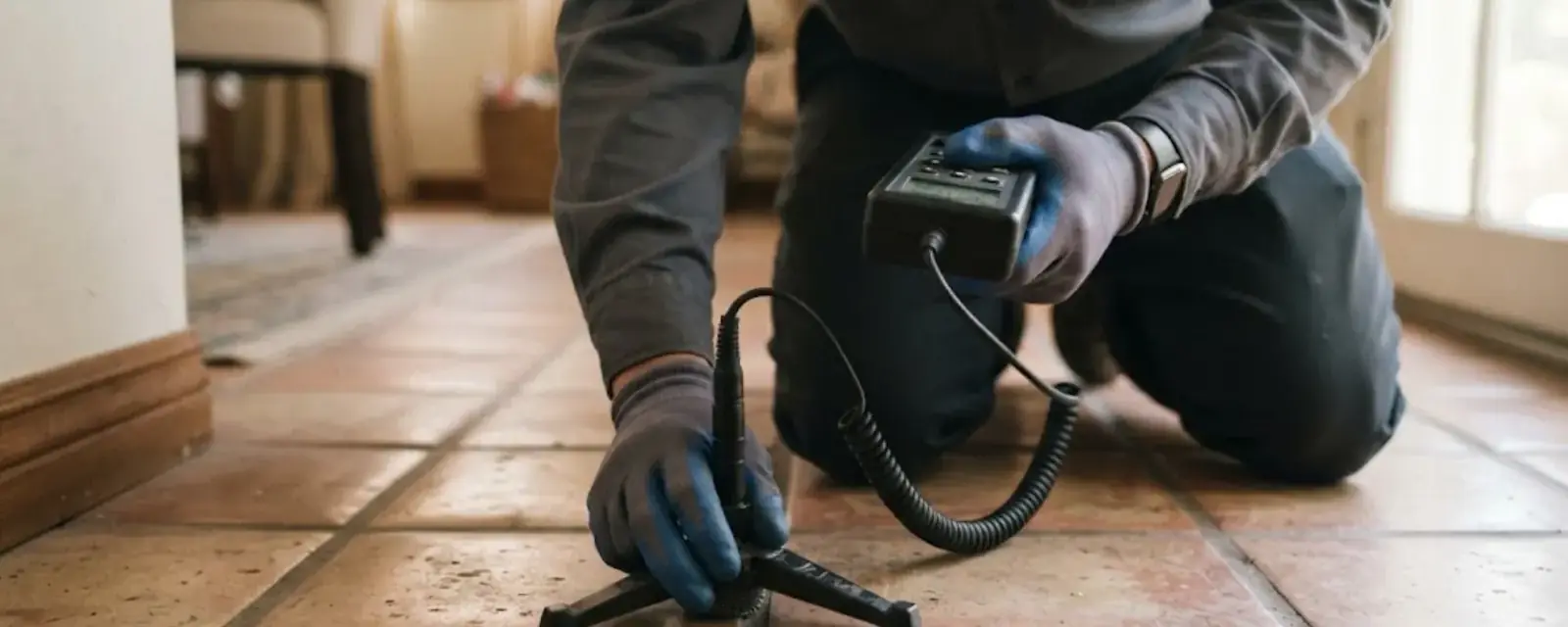
Leak detection is the work of locating a water leak without tearing out walls or floors to find it. The best plumbers use the symptom to narrow the search, then confirm with equipment. In Chino Hills, an active leak is urgent, since a pinhole in a pressurized line can soak drywall, flooring and framing within hours. The 24/7 emergency line is open for leaks that cannot wait.
The U.S. Environmental Protection Agency's WaterSense program says the average household loses nearly 10,000 gallons of water a year to leaks, and ten percent of homes leak 90 gallons a day or more. Most of that water is never seen, which is why a high bill is often the first clue.
Symptoms that point to a hidden leak
Many leak calls start with a symptom, not the word leak. Watch for:
- The water meter keeps moving when every tap and appliance is off.
- A water bill that jumps with no change in use.
- A warm spot on the floor, which can mean a hot water line under the slab.
- A damp or stained ceiling, wall or baseboard.
- The sound of running water when nothing is on.
- Lower water pressure than usual.
- Wet soil, a soft patch in the yard or a green stripe in the lawn.
If you see water actively spraying or pooling, shut off the main valve, then call the 24/7 line.
The meter test you can do first
A meter test costs nothing and tells you whether the leak is real. Turn off every tap, appliance and irrigation system, then look at the meter. Many meters have a small low-flow indicator, often a triangle or dial, that moves when any water passes. If it moves, a leak is likely on your side of the meter.
Next, close the main shutoff valve at the house. If the meter stops, the leak is inside the house. If it keeps moving, the leak is between the meter and the house, often a buried line. Pass this on to the dispatcher. It saves time.
How leaks are found
| Method | What it finds | Used for |
|---|---|---|
| Pressure test | Whether a line holds pressure | Isolating a supply line |
| Acoustic listening | The sound of water escaping | Slab, wall and buried line leaks |
| Thermal imaging | Temperature differences from wet or hot areas | Hot water leaks, wet walls |
| Moisture meter | Water inside drywall and framing | Ceiling and wall leaks |
| Camera inspection | Cracks, joints and drain leaks | Sewer and drain line leaks |
| Tracer gas | Tiny leaks in pressure lines | Hard-to-find leaks |
Ceiling, wall and attic leaks
A stain on a ceiling is rarely where the leak starts. Water travels along framing and pipes before it shows up. A bathroom above the stain, a roof penetration or a supply line in the wall can all be the source.
The plumber checks the fixtures above, tests supply lines and uses a moisture meter and thermal camera to trace the wetness back to its source. If the roof is the cause, you need a roofer, and an honest plumber will say so.
Under the house, under the slab and in the yard
Homes on raised foundations let a plumber look underneath for wet insulation, rusted fittings and stains. Homes on slabs hide the lines. A leak in a slab line can show up as a warm floor, a hissing sound or a high bill. See slab leak repair for how those are fixed.
Buried lines carry water from the meter to the house. A leak here can surface as a wet yard or a meter that keeps running. Repairs are covered on the water line repair page.
Irrigation leaks are common too. A broken sprinkler line or a cracked valve box can mimic a house leak on the meter, so a plumber checks the irrigation shutoff first. A pool or spa leak is a different specialty, and we will tell you if it needs one.
Chino Hills homes and hidden leaks
Chino Hills has homes built over several decades. Tracts built after the 1982 Specific Plan are now old enough that copper supply lines can develop pinhole leaks, and older Los Serranos and Sleepy Hollow homes may have patched or mixed piping. Hillside lots can also see higher water pressure, which stresses fittings and pipes. A plumber can check the pressure at a hose bib as part of a leak visit. If it runs high, a regulator may be worth discussing.
Check your water bill too. The City of Chino Hills supplies water to the distribution system, so a sudden jump on your city bill is worth a meter test. If the meter test points to a leak, call.
What affects leak detection pricing
- How long the search takes and how many methods are needed.
- Access to walls, slab, crawlspace or yard.
- Whether repair is done at the same visit or planned separately.
- Whether a camera or tracer gas is needed.
- After-hours timing versus a scheduled appointment.
Insurance may cover resulting water damage from a sudden leak, and some policies cover the cost of finding it. Read your policy, and keep photos. For a real number, call (714) 750-8637.
Why the numbers matter
The U.S. Environmental Protection Agency says household leaks can waste nearly 10,000 gallons of water a year, which is why a hidden leak is worth finding early. Repairs that follow detection must meet the California Plumbing Code, based on the Uniform Plumbing Code (UPC), and some openings in walls or slabs may need a permit.
Leak detection questions in Chino Hills
Frequently asked questions
Yes. Call the 24/7 line at (714) 750-8637, shut off the main valve if water is flowing and describe the symptoms. Ask the dispatcher about timing.
Shut off the main valve at the house. If the water meter stops moving, the leak is inside. If it keeps moving, the leak is between the meter and the house.
Often yes. Acoustic listening, thermal imaging and moisture meters narrow it to a small area, so any opening is small and targeted.
Common causes are a running toilet, a dripping fixture, an irrigation leak or a hidden line leak. A meter test separates them quickly.
Yes. Chino and nearby towns are covered.