
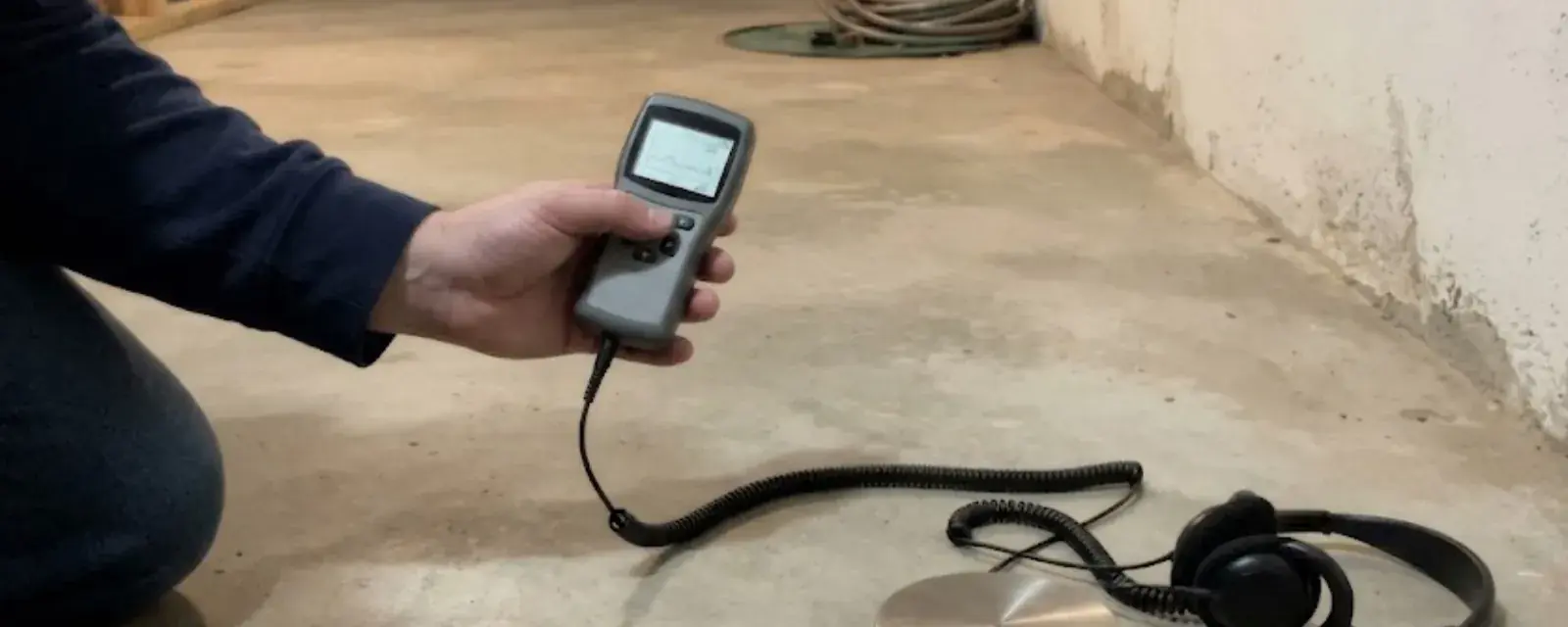
A slab leak is a leak in a water line that runs under or inside a concrete foundation slab. In Chino Hills, it is a serious problem because the water can undermine flooring, raise humidity and run up a bill before anyone sees it. If you suspect one, the 24/7 line is open, and quick action limits damage.
Shut off the main water valve if you hear running water or feel warm patches. Then check the meter with everything off. If it still moves after the main closes at the house, the leak is outside. If it stops, the leak is inside, and a slab leak is possible.
Signs of a slab leak
- A warm or hot spot on the floor, usually from a hot water line.
- The sound of running water when everything is off.
- A water meter that moves with all fixtures off.
- A sudden jump in the water bill.
- Damp carpet, buckled flooring or wet baseboards.
- Cracks in walls or floors that appear with moisture.
- Musty smell or mold at the base of walls.
- Low hot water pressure.
Hot water lines are often the first to leak, because heat and expansion stress the pipe.
How a slab leak is found
| Step | What it does | Result |
|---|---|---|
| Meter test | Shows whether any water is moving | Confirms a leak |
| Isolate the lines | Tests hot, cold and each branch with pressure | Narrows to a line |
| Acoustic listening | Microphones hear the leak through the slab | Pinpoints the spot |
| Thermal imaging | Shows warm areas over hot water leaks | Confirms the path |
| Mark and plan | The location is marked on the floor | Limits the opening |
A good detection keeps the opening small. Guessing wastes concrete, floors and money.
Repair options
- Spot repairThe slab is opened at the leak, the pipe is repaired and the slab is patched. This works for a single accessible leak.
- RerouteA new line is run through walls or attic and the old slab line is abandoned. This is often used when the line is old or has several leaks.
- Pipe liningEpoxy lining can be an option for some lines, though not all.
- RepipeIf the whole system is failing, see repiping.
Your plumber will explain the choice and why. A reroute costs more up front but avoids breaking the slab again.
What to do while you wait
Close the main valve to stop the loss. Use the water only when necessary. Move rugs and furniture off wet floors. Take photos and note the date for insurance. Open windows if the area smells musty. Do not break the slab yourself, since that can damage other lines or conduits.
Chino Hills homes and slabs
Many homes in Southern California are built on concrete slabs, and some Chino Hills homes are too, though hillside lots may have raised or stepped foundations. Ask what yours has before you start. Homes from the decades after the 1982 Specific Plan have copper lines that are now older, and pinhole leaks can develop. In older neighborhoods like Los Serranos, the mix of piping can complicate things.
High water pressure can stress lines. A plumber can check pressure at a hose bib, and a regulator may help.
What affects slab leak pricing
- Leak depth, location and access.
- Repair method, spot repair, reroute or repipe.
- Floor finishes that must be removed and replaced.
- Permit, inspection and any related plumbing work.
- After-hours timing.
Many homeowner policies cover damage from a sudden leak and may cover access to the leak, while the pipe itself is usually your cost. Check yours. For a real number, call (714) 750-8637.
Protecting the house while you wait
Shut off the main water valve if you suspect a slab leak, then turn the water back on only when you need it. That limits damage while a plumber arrives. Move rugs and furniture off warm or damp floor areas, since moisture can stain and warp flooring quickly.
Check the water meter with every fixture off. If the dial keeps moving, water is escaping somewhere. Photograph the meter and any damp spots, which helps both your plumber and your insurance conversation.
Leak location versus repair choice
Finding the leak and choosing the repair are separate decisions. Detection tells you where the break is and how many other pipes run nearby. The repair choice depends on whether the failure is a single pinhole or a sign of a failing line. Ask for the options in writing, with the reason for each one, before you approve work.
Standards for slab repairs
The EPA says household leaks waste nearly 10,000 gallons of water a year, so a leak under the slab is worth fixing promptly. Repairs and reroutes must meet the California Plumbing Code, based on the Uniform Plumbing Code (UPC), and cutting into a slab may call for a permit. Ask the plumber to explain which applies.
Slab leak questions in Chino Hills
Frequently asked questions
Yes. The line is open 24/7. Call (714) 750-8637, shut off the main and describe what you notice. Ask the dispatcher about timing.
With a meter test, line isolation, acoustic listening and thermal imaging, which together locate the leak without guessing.
Not always. A reroute through walls or attic avoids the slab, while spot repair opens a small section.
A long-running leak can erode soil under a slab and cause damage. Prompt action limits it.
Yes. Chino and neighboring towns are covered.