
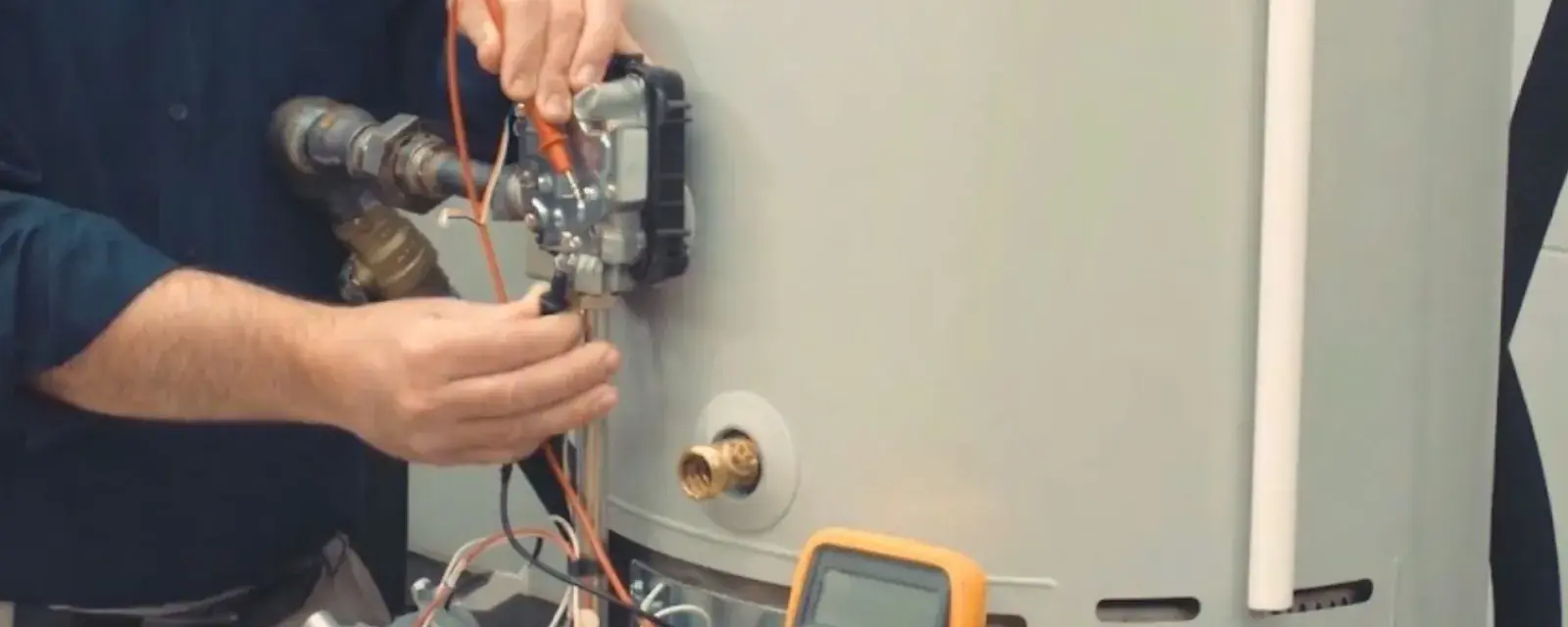
Water heater repair means finding out why a heater stopped making hot water, or why it started leaking, and fixing the failed part. When the tank in a Chino Hills home quits on a cold morning, or water spreads across the garage floor, the call is urgent. The 24/7 emergency line is open nights, weekends and holidays, so you do not have to wait for the next business day to get a plumber on the way.
Before you call, look at the tank. If water is coming out of the bottom or the tank seam, turn off the cold water supply to the heater, shut off the power or gas, and keep the area clear. If you smell gas, leave the house and call your gas utility or 911 before you call us.
Emergency signs that cannot wait
Some water heater problems are annoying, and some can hurt people or flood a home. Treat these as emergencies:
- Water spreading from the base of the tank or from the tank body.
- A rotten egg smell near a gas heater, which can mean a gas leak.
- A hissing, popping or banging tank that is also very hot to the touch.
- Water that runs scalding from taps, which can point to a failed thermostat.
- A tripped breaker that will not reset on an electric heater.
None of these should be left overnight. Call the 24/7 line and describe what you see and hear. That tells the dispatcher whether you need a repair visit or are likely looking at a replacement.
No hot water: the usual culprits
Most no-hot-water calls come down to a short list of failed parts. The plumber tests in order, starting with the cheapest and most likely cause.
| Symptom | Gas heater cause | Electric heater cause |
|---|---|---|
| No hot water at all | Pilot out, bad thermocouple or gas control | Tripped breaker, failed high-limit switch |
| Lukewarm water | Dirty burner, failing control valve | One dead heating element or bad thermostat |
| Water runs out fast | Sediment filling the tank, broken dip tube | Lower element failed, sediment buildup |
| Popping or rumbling | Sediment hardened at the bottom | Scale on the elements |
| Leak at the top | Loose fitting, failed relief valve | Loose fitting, failed relief valve |
| Leak at the bottom | Tank has failed from corrosion | Tank has failed from corrosion |
Leaks: repair or replace
A leak is the symptom that decides everything. A drip from a fitting, a supply connection or the temperature and pressure relief valve is usually a repair, because the tank itself is still sound. Water from the tank bottom or seam means the steel has corroded through, and no part will fix that.
Tank heaters generally last about 8 to 12 years, according to the U.S. Department of Energy, so a leaking heater that is already past 10 years is usually a water heater replacement job. A younger tank with a failed valve or fitting can often be saved. Your plumber will tell you which side of the line you are on before work begins.
What a repair visit includes
A diagnosis is more than guessing the part. Here is the order a careful plumber follows.
- Safety checkConfirm gas smell, venting, water on the floor and electrical hazards before touching anything.
- Test the heat sourceCheck the burner, pilot and gas control on gas units, or elements, thermostats and breakers on electric units.
- Inspect the tank and fittingsLook for corrosion, leaking fittings, the relief valve and the anode rod condition.
- Explain the repairYou hear what failed, what the part costs and whether replacing the heater makes more sense.
- Test the resultHot water is run and temperature, pressure and venting are checked before the plumber leaves.
Settings and upkeep that prevent repeat calls
Many repeat repairs trace to neglect. Flushing the tank once a year clears sediment that insulates the burner or elements and makes them overheat. The anode rod is the sacrificial part that corrodes in place of the tank, and checking it every few years can add useful life. Setting the thermostat to 120 degrees Fahrenheit, which the Department of Energy recommends for most homes, saves energy and lowers scald risk.
Hard water speeds scale inside any heater. The City of Chino Hills blends water from several sources, including imported State Water Project supply and groundwater, so what comes out of your tap can differ by neighborhood and over time. Read the city annual water quality report and test your own tap if you notice white scale on fixtures. If scale is a problem, a water softener or filtration system may be worth a look.
Chino Hills homes and water heater repair
Chino Hills homes range from 1920s canyon cabins in Sleepy Hollow to master-planned neighborhoods built after the county approved the Specific Plan in 1982. In a home that has not had its heater replaced, the original unit may already be past its expected life. Garage installations common in hillside tracts should have the tank braced, because California law requires water heaters to be braced, anchored or strapped against earthquake motion.
If the heater is a tankless unit, repairs follow different rules. See the tankless water heater page for error codes, flushing and descaling.
What affects the price of a water heater repair
A repair price follows the part and the access, not a flat rate. These are the main factors:
- Which part failed, such as a thermocouple, element, thermostat, relief valve or gas control.
- Whether the unit is gas or electric and how old it is.
- How hard the heater is to reach, including attic, closet or tight garage installs.
- Whether code corrections like bracing or venting are needed at the same visit.
- After-hours timing compared with a scheduled appointment.
Homeowner insurance may cover water damage from a sudden tank failure, but not the heater itself when it simply wore out. Ask your insurer. For a real number on your unit, call (714) 750-8637 and the price is explained before work begins.
Water heater repair questions in Chino Hills
Frequently asked questions
Yes. The line is open 24/7, including nights, weekends and holidays. Call (714) 750-8637, say whether the heater is leaking, out of gas or out of power, and a plumber will be arranged. Ask the dispatcher about timing.
A leak from a fitting or relief valve is usually repairable. A leak from the tank body means the tank has corroded through and needs replacement. Age matters too, since most tank heaters last about 8 to 12 years.
Sediment collects at the bottom of the tank, traps water beneath it and pops as it heats. A flush can often quiet it, but a heavily scaled tank may be near the end of its life.
Many manufacturers describe the steps on the tank label, but a pilot that will not stay lit usually means a bad thermocouple or gas control. If you smell gas, do not try, leave the house and call your gas utility.
Yes. Our coverage includes Chino and neighboring towns. Give the dispatcher your address when you call.