
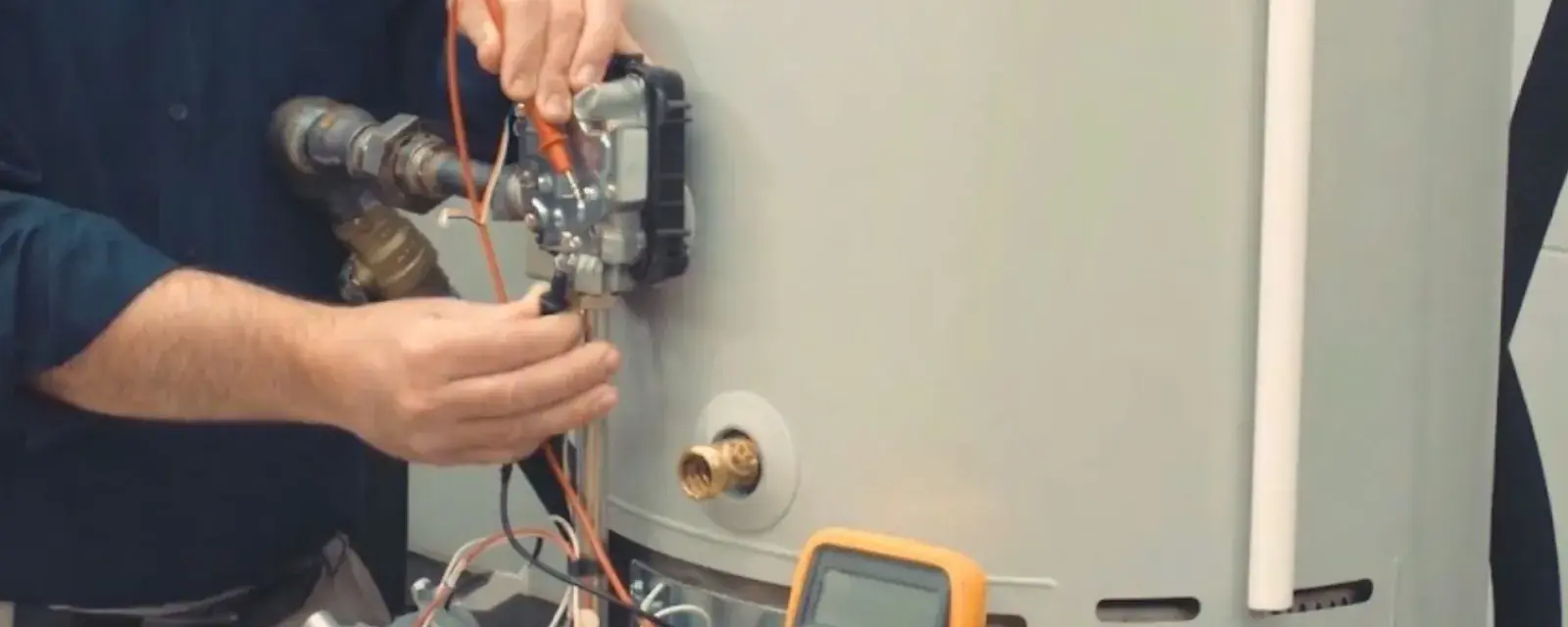
On a gas water heater, the thermostat is built into the gas control valve at the bottom of the tank. A probe inside the tank senses the water temperature and tells the valve to open or close the gas to the burner.
The dial on the front sets the target. A setting around 120 degrees Fahrenheit is a common recommendation for homes, and many heaters ship with a lower or a higher mark than that, so check your actual water temperature.
How to set the temperature safely
Use a kitchen thermometer to check the hot water at the tap that is farthest from the heater, after letting it run for a minute. Compare that reading with the dial. The dial is a rough guide, and the water is the real test.
Turn the dial a small step at a time and wait several hours before testing again. Water that is too hot can scald, especially for children and older adults. Hot water set too low may encourage bacterial growth in the tank, so do not go much below 120 degrees. If anyone in your home has special health needs, ask your doctor for the temperature that suits them.
Signs the thermostat or control valve is failing
- The water is too hot or too cold, no matter where the dial is set.
- The burner lights but shuts off before the water is warm.
- The pilot light will not stay lit or keeps going out.
- The dial feels loose or does not click between settings.
- You smell gas near the heater.
If you smell gas, leave the house, do not use switches or phones inside, and call your gas utility or 911 from outside. Do not try to relight the pilot.
What each symptom usually means
| Symptom | Likely cause | Next step |
|---|---|---|
| No hot water, pilot out | Failed thermocouple or pilot assembly | Plumber repair |
| Water too hot | Stuck thermostat or valve | Turn down and call |
| Lukewarm water | Sediment or a worn thermostat | Flush the tank, then check |
| Cycles on and off | Failed sensor or a venting problem | Plumber inspection |
| Rumbling | Sediment on the burner side | Flush or service |
What a plumber replaces
Most thermostat problems are fixed by replacing the gas control valve or the thermocouple. The tank itself does not need to come out. A control valve swap involves disconnecting gas, so it should be done by a licensed professional who tests every joint for leaks afterward.
Before paying for a valve, ask the plumber to check the venting and the burner. A weak draft or a dirty burner can mimic a bad thermostat.
Gas heaters in Chino Hills homes
For Chino Hills, two verified points matter. The City of Chino Hills lists water heater replacement among the work that needs a permit, so a full replacement is not a do-it-yourself project. State law under Health and Safety Code section 19211 requires bracing for new and replacement water heaters, and older garage units often lack it.
Gas heaters in garages are common in hillside homes. Make sure the burner area stays clear of storage, paint and gasoline, which give off vapors. Keep a few feet of clearance around the heater.
When to flush and when to replace
Sediment builds up on the bottom of a tank, and a yearly flush through the drain valve helps slow it. The U.S. Department of Energy says storage tank water heaters commonly last about 10 to 15 years. If yours is older and has started to rumble or leak, replacement is usually a better use of money than another repair.
See water heater replacement for how a swap works and what to expect.
A safe routine for owners
Check the heater when the seasons change. Look for rust on the flue, water around the base and soot on the draft hood. Test the temperature and pressure relief valve once a year by lifting the lever briefly with a bucket under the discharge pipe. Do not store flammables nearby.
If you move or buy a home, ask the plumber to look at the heater, including the date on the tank label. For coverage details, see Chino plumbing coverage and the service area page.
How the control valve decides when to fire
The gas control valve watches a temperature sensor and a safety device called a thermocouple. When the water drops below the set point, the valve opens and the burner lights. When the water reaches the target, the valve closes. The thermocouple proves the pilot is lit, and it shuts the gas if the flame goes out.
That safety design is why a failed thermocouple shows up as a pilot that will not stay lit. The heater is doing what it should, which is refusing to feed gas to a burner it cannot confirm.
Why water temperature matters
Hot water that is too hot is a scald risk, especially for children and older adults. The temperature that suits your home depends on who lives there, and a thermostat set higher also raises standby energy use. Setting the dial lower can reduce both the risk and the bill.
Do not set the dial to the hottest mark and forget it. Many heaters have a vacation or pilot setting, which keeps the pilot lit while the tank cools. Use it when you are away for long.
Mixing valves and anti-scald protection
A thermostatic mixing valve at the heater blends cold water into the hot outlet to cap the temperature at fixtures. Plumbers install them where a safer temperature matters, such as homes with young children or older adults. If your heater runs hot for sanitary or dishwasher reasons, a mixing valve lets you keep the tank hot and still protect the taps.
Frequently asked questions
Many households use about 120 degrees Fahrenheit. Check with a thermometer at the tap, and talk to a doctor if someone in the home has particular needs.
Common causes are a worn thermocouple, a drafty vent or a dirty pilot tube. A plumber can find which.
The gas control valve involves gas connections, so it is a job for a licensed plumber.
The City of Chino Hills lists water heater replacement as permit work. Ask the city about your address.
The Department of Energy says storage tank heaters commonly last about 10 to 15 years, depending on water quality and care.
Quick checks before you call
Look at the pilot window and see whether the flame is blue and steady. Check that the gas valve to the heater is open. Confirm the dial is not set to the pilot or off position. Look for tripped breakers if the heater has an electric igniter. If none of that fixes it, do not keep trying to relight the pilot. Call a licensed plumber.
Codes for gas water heaters
Gas water heater work follows the California Plumbing Code, which is based on the Uniform Plumbing Code (UPC), and the fuel gas provisions that cover gas piping. Because gas is involved, leave valve and venting work to a licensed plumber.