
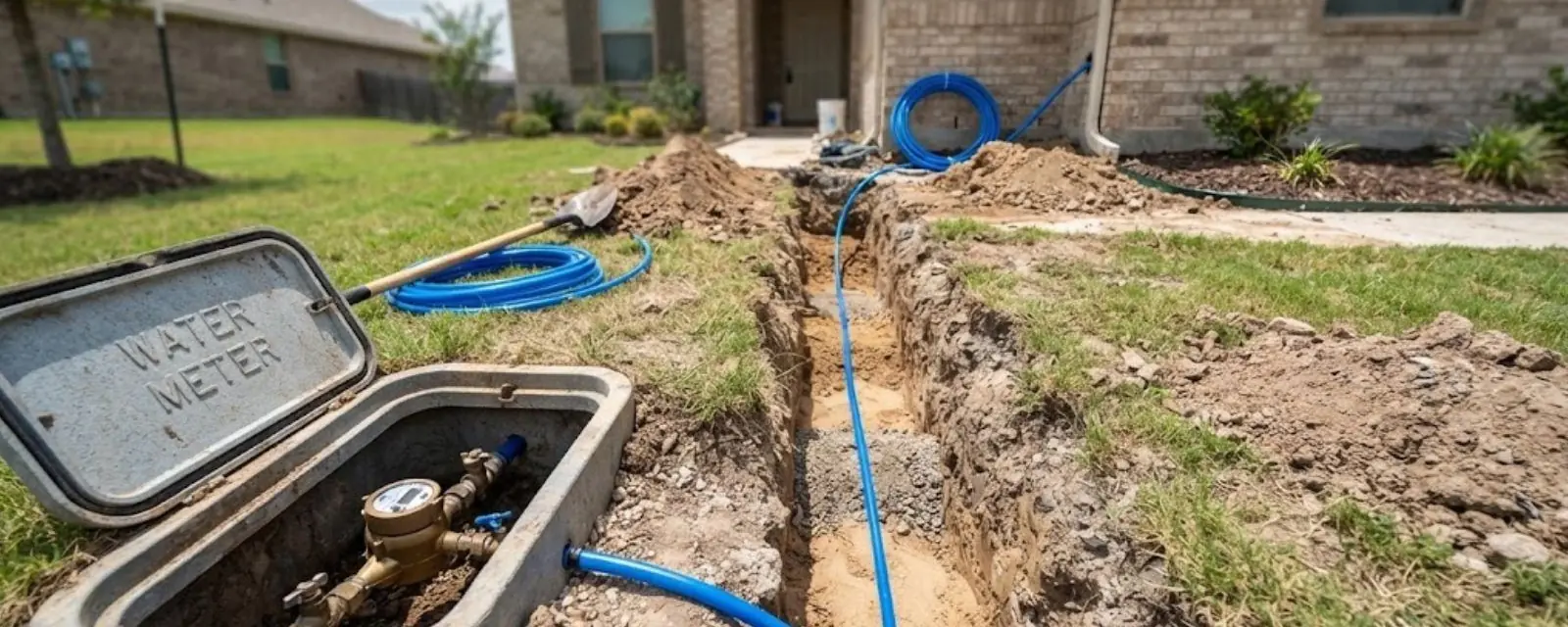
Low water pressure at every tap in your house points to a problem upstream of the fixtures, such as a partly closed main valve, a failing pressure regulator, a leak in the service line or a clogged pipe. If only one faucet is weak, the cause is local, such as a clogged aerator. This guide shows how to test your pressure and what each result suggests, so you can tell whether it is a quick fix or a plumber's job.
Start with a pressure gauge
A simple pressure gauge screws onto an outdoor hose bib and costs little. Close all fixtures, attach the gauge and read the number. Many homes run between 40 and 80 pounds per square inch, and numbers outside that range deserve attention. A reading well below that range points to a supply problem or a failing regulator. A reading above it can damage fixtures and appliances.
Test again at different times of day. If pressure drops in the evening, your neighborhood demand may be the cause.
Common causes of whole-house low pressure
| Cause | Clue | Fix |
|---|---|---|
| Main valve partly closed | Pressure changed after work on the house | Open the valve fully |
| Failing pressure regulator | Pressure is far from normal or drifts | Replace or adjust the regulator |
| Leak in the service line | Meter runs with everything off, wet ground | Locate and repair |
| Corroded or clogged pipes | Old galvanized or scaled pipe, rusty water | Repipe sections |
| Utility issue | Neighbors have the same problem | Contact the water provider |
| Shutoff valve problems | One section weak | Check and replace valves |
Check the simple things first
Make sure the main shutoff valve is fully open. A gate valve opened halfway restricts flow. Check the meter valve, which belongs to the utility, so do not adjust it yourself. Look at the pressure regulator, a bell-shaped device near the main line, and ask a plumber to test it if the gauge shows a problem.
Check for a hidden leak by turning off all fixtures and watching the meter. A spinning dial means water is escaping. See leak detection for how a plumber finds it.
Old pipes and pressure loss
Galvanized steel pipe rusts from the inside and narrows over decades. The result is full pressure at the meter and a trickle at the fixtures. Copper can also scale in hard water areas. If rusty or discolored water comes with the low pressure, the pipes may be failing. See repiping for how a replacement works and how a plumber decides between sections and the whole house.
Chino Hills pressure and your water supply
The City of Chino Hills supplies water from several sources, including treated surface water bought through regional suppliers and groundwater from city and district wells, per the city's water quality page. Local pressure is set by the water system, and the pressure you see depends on your elevation and where you sit in the system. Hillside homes can see different pressure from homes in flatter areas.
If your neighbors share the problem, contact your water provider. If they do not, the issue is inside your property.
Pressure that is too high
Too much pressure is as much of a problem as too little. It stresses supply lines, fixtures and water heaters, and it can cause water hammer. A pressure regulator brings it down. If your gauge reads high, ask a plumber about a regulator and an expansion tank, especially if you recently had a leak or a noisy pipe.
What a plumber will do
A plumber checks the main valve, measures static and flowing pressure, inspects the regulator and looks for leaks. They also check for clogs in filters or strainers. If the service line is the problem, a repair or a replacement may be required. For coverage, see Chino plumbing coverage and our service area.
Local versus whole-house, a quick test
Turn on a tap close to the main line and one far from it. If both are weak, the problem is upstream. If only the far one is weak, you may have a restriction in a branch line or a partly closed valve. Compare hot and cold. If only hot is weak, the water heater, its shutoff or the hot lines are the likelier cause.
Check a few fixtures, not one. This quick map saves the plumber time and saves you money.
Aerators, cartridges and shutoffs
Before you call, unscrew the aerator on the tap and rinse out any grit. Look at the angle stops under sinks to make sure they are fully open. Check any whole-house filter, since a clogged cartridge reduces flow to every fixture. Replace the cartridge on schedule.
If you recently had plumbing work, a valve left partly closed is a common culprit.
Pressure regulators explained
A pressure regulator is a small valve near the main shutoff that lowers incoming pressure to a safe level. Over time the spring and diaphragm wear, and the regulator can fail either way, letting pressure creep up or choking it down. A plumber can test it with a gauge and either adjust or replace it. Replacement is usually a short job, though access can vary.
Not every house has one. If your supply pressure is low, a booster pump may be an option, but a plumber should confirm the cause first, since a pump on a leaking or restricted line makes things worse.
When pressure drops with a smell or color
Rusty, brown or cloudy water with low pressure suggests corroded pipes or a disturbance in the supply. Run a cold tap for a few minutes to see if it clears. If it does not, or if it recurs, call. If you notice a sudden loss of pressure with a sound of running water, close the main and call right away.
Frequently asked questions
Common causes are a partly closed valve, a failing regulator, a leak or corroded pipes.
Many homes run between 40 and 80 pounds per square inch. A gauge tells you your actual number.
Yes. A leak in the service line or inside the house can reduce pressure at the fixtures.
Contact your water provider. They manage the supply side.
Not usually, unless you suspect a leak or lose water entirely. Then close the main valve and call.
What to write down for the plumber
Record your gauge reading, the time of day, which fixtures are weak and whether hot or cold is affected. Note any recent plumbing work and any change in water color. A short list helps the plumber go straight to the likely cause.
What the codes say about pressure
The California Plumbing Code, which is based on the Uniform Plumbing Code (UPC), calls for a pressure regulator where supply pressure exceeds a set limit, and it sets pressure and sizing rules for supply lines. A plumber can tell you which limit applies to your house.