
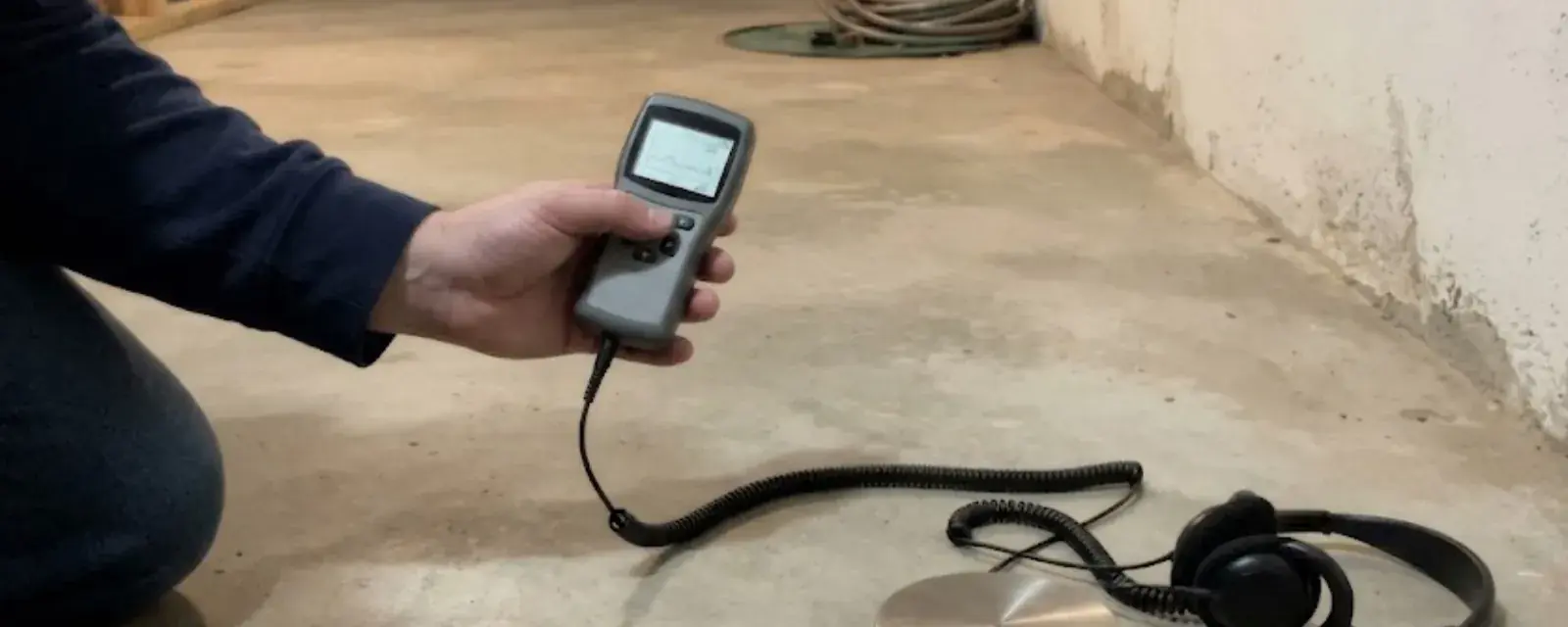
A slab leak is a leak in a water line under or inside your home's concrete foundation. Because you cannot see the pipe, the signs show up somewhere else: a warm spot on the floor, a meter that keeps running, a bill that jumps or the sound of water when everything is off. If you notice one of these, test the meter, close the main valve and call a plumber who can pinpoint the leak without opening the floor blindly.
The signs to look for
- A warm or hot area on a floor, which can mean a hot water line is leaking.
- The sound of running water when all fixtures are off.
- A water meter that keeps moving when nothing is on.
- A sudden rise in your water bill without a change in use.
- Damp carpet, buckling flooring or wet baseboards.
- Low hot water pressure with no clear cause.
- A musty smell or visible mold along a wall base.
- Cracks in the slab or walls that are new.
One sign alone can have other causes. Several together make a slab leak much more likely.
Confirm it with the meter test
Shut off every fixture and appliance. Find the water meter, usually in a box near the curb, and look at the low flow indicator, a small dial or triangle that spins when water moves. If it turns with everything off, water is escaping somewhere. Close the main valve at the house and look again. If the meter stops, the leak is inside the house. If it keeps moving, the leak is in the line between the meter and the house.
The U.S. Environmental Protection Agency says household leaks can waste nearly 10,000 gallons of water a year, which is why a small unseen leak adds up.
What causes slab leaks
| Cause | How it leads to a leak |
|---|---|
| Pipe corrosion | Water chemistry and age wear the pipe wall |
| Abrasion | Pipes rub against concrete or gravel as they expand and shrink |
| Poor installation | Kinks or sharp bends create weak points |
| High water pressure | Constant stress at joints and fittings |
| Soil movement | Shifting ground stresses pipes under the slab |
How a plumber finds the leak
Leak detection uses listening equipment, thermal imaging and pressure testing. The plumber isolates sections of the line to narrow the area, then pinpoints the spot, so the repair opens a small area of floor instead of a large one. See leak detection for how that works.
Ask for a written finding with the location of the leak and the options for repair.
Repair options at a glance
A plumber can repair the leak in place by cutting the slab at the spot, reroute the line through the walls or attic to avoid the slab, or replace the line. The right choice depends on how many leaks there are, the condition of the pipe and the cost. Rerouting is common when the pipe is failing in several places. A single pinhole in an otherwise sound pipe may only need a spot repair.
For the full repair path, see slab leak repair.
Chino Hills foundations and what to watch
Most Chino Hills homes were built after the county approved the Specific Plan in 1982, so many slabs and pipes are now decades old. Copper lines in that era can fail from corrosion or pinholes over time. Hillside and canyon areas such as Carbon Canyon can see more soil movement, which stresses the pipes under a slab.
The City of Chino Hills lists work that requires a permit on its website. Ask your plumber whether a repair or reroute needs one for your address.
What to do right now
- Close the main water valve.
- Note the meter reading and take photos of damp or warm areas.
- Move belongings off the affected floor.
- Call a plumber for detection.
- Call your insurer to ask what is covered. Do not assume coverage.
Do not break the slab yourself. A wrong guess costs more than the detection visit. For coverage, see Chino plumbing coverage and our service area.
Hot and cold lines behave differently
A leak in a hot water line under the slab often shows as a warm spot or a rising gas bill, since the heater keeps running to replace lost hot water. A cold line leak is harder to feel and usually shows up as a high bill, a moving meter or damp flooring. Knowing which line is leaking helps the plumber choose where to start detection.
If your hot water takes much longer to arrive or runs out faster than before, mention that. It can be an early clue.
Why waiting costs more
Water under a slab can soften the soil, stain flooring and feed mold in walls. It can also wear a hole in a neighboring pipe, since escaping water under pressure can abrade other lines. A leak caught early often needs a small repair, while one left alone may spread across a larger area.
Do not rely on a slab leak sealing itself. Concrete and soil do not seal pressurized leaks.
What to ask the plumber
- How will you find the leak, and will you show me the result?
- Is the leak a single point or a sign that the line is failing?
- What are the options, including rerouting and replacement?
- What will the floor and the access look like afterward?
- Who handles the permit and the patching?
A plumber who answers plainly and in writing is the one to hire.
Insurance and documentation
Keep photos of the damage, the meter readings and the plumber's written finding. Ask your insurer what the policy covers before the work begins, and ask whether they require their own inspection. Some policies cover water damage but not the repair of the pipe itself. The paperwork you collect now makes the claim smoother later.
Frequently asked questions
It is urgent. Close the main valve and call. Water can damage flooring and the foundation if left running.
No. Leaks grow over time.
Policies differ. Many cover resulting damage, though not always the pipe repair. Ask your insurer.
Often a few hours, depending on the access and the line layout.
A hot water line may be leaking under that spot. Call a plumber to confirm.
Keeping a record
Take a photo of the meter, the warm spot and any damp areas on the day you notice them. A dated record helps the plumber, the insurer and your own memory. Update it as things change.
Standards for the repair
The U.S. Environmental Protection Agency says household leaks waste nearly 10,000 gallons of water a year. Repairs and reroutes must meet the California Plumbing Code, which is based on the Uniform Plumbing Code (UPC), and some work may need a permit.