
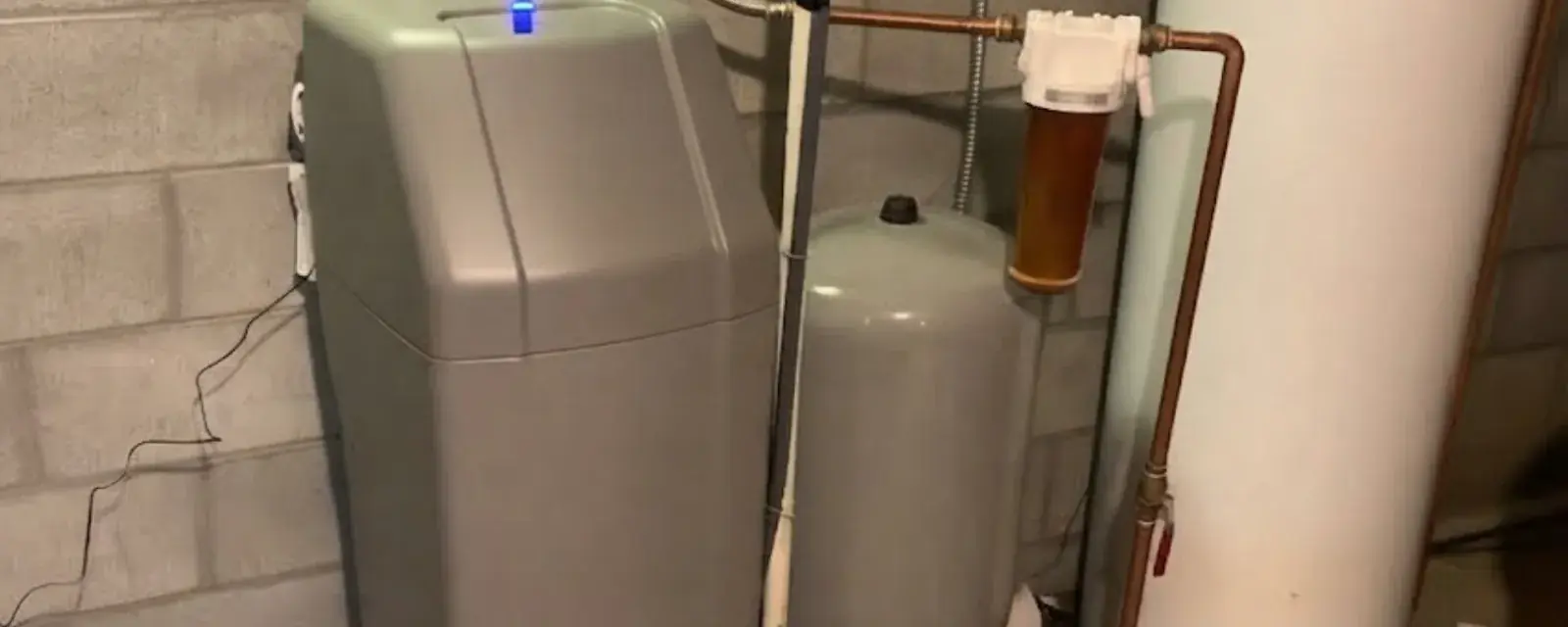
A tankless water filtration system is a filter that treats water as it flows, without a large storage tank. Some are whole-house units at the main line, some sit under a sink, and some are compact reverse osmosis systems. The word tankless can mean different things in different ads, so the first job is figuring out what problem you are trying to solve. This guide walks through how to do that for a Chino Hills home.
Start with the problem, not the product
People buy filters for five reasons: taste, odor, cloudiness, scale and concern about contaminants. A filter that fixes one may do nothing for another. Chlorine taste and odor respond to carbon filtration. Sand and particles respond to sediment filters. Scale from hard water is a mineral problem that filters do not solve, since a softener handles it. Concerns about contaminants call for a lab test and, if needed, a certified system.
Write down what you notice and where. If only the kitchen tap tastes off, a point-of-use filter may do the job at a fraction of the cost of a whole-house system.
Types of filtration compared
| Type | Good for | Does not address |
|---|---|---|
| Sediment filter | Sand, silt, rust particles | Taste, dissolved minerals |
| Carbon filter | Chlorine taste and odor | Hardness, most dissolved minerals |
| Reverse osmosis | Drinking water at one tap, dissolved solids | Whole-house use, takes space and wastes some water |
| Softener | Hardness scale | Taste, chlorine |
| UV unit | Microorganisms | Chemicals, minerals |
A tankless filter is typically a cartridge or two in a housing. Cartridges wear out, so ask how often they need replacing and what a replacement costs, because the running cost can exceed the purchase price over time.
Test your tap first
A home test kit is a starting point, and a certified lab test is better for specific concerns. Ask the lab what is included. The U.S. Geological Survey scale for hardness calls water under 60 milligrams per liter soft and over 180 very hard, so a hardness number tells you where you stand.
The Environmental Protection Agency sets rules for public water systems, and your water system publishes an annual report. Read it, and compare it with your own test. If the two differ, ask the water system why.
What Chino Hills tap water is made of
The City of Chino Hills explains on its water quality page that it supplies water from several sources. It buys treated surface water from the Metropolitan Water District through the Water Facilities Authority and the Monte Vista Water District, and that water originates in the State Water Project.
It also uses groundwater from city wells, Monte Vista Water District wells and Chino Basin Desalter Authority wells. The page notes that all but one city-owned well were inactivated due to groundwater contamination, with a new treatment plant planned to let the city reactivate six.
What that means for you: your water is a blend, and the blend can change. Read the city's annual Consumer Confidence Report, which is on the city website, and test your own tap. We do not quote a hardness figure for Chino Hills here, because the right number is the one measured at your house.
Whole-house or one tap
A whole-house system treats everything, including shower and laundry water, and protects pipes and appliances. It needs space, a bypass and a drain for some types, and it costs more. A point-of-use system sits under the kitchen sink and treats drinking and cooking water only. For many households that is plenty.
If scale is the issue, protect the water heater first. Scale insulates the tank and clogs tankless heat exchangers. Our pages on the tankless water heater and water softener and filtration explain the connection.
Maintenance and cost of ownership
Every filter needs upkeep. Cartridges need replacing on a schedule, and a clogged cartridge reduces pressure. Reverse osmosis membranes wear out. Softeners need salt. Ask for the annual cost in writing, along with the purchase price. A cheap system with expensive cartridges is a poor deal.
Also ask what the system is certified to do. Standards bodies test and certify filters for specific claims, and the label should say which. A filter without certification for a claim may not do what the box implies.
When to call a plumber
Installation involves cutting into the main line, setting bypass valves and sometimes adding a drain or electrical outlet. A mistake can flood a garage. Some communities in California restrict salt-based softeners, so ask your utility before buying. A plumber can also check your water pressure, since a high-pressure house can stress filter housings.
Questions to ask a seller
Sales calls can blur the line between a filter and a softener. Ask what the system removes, in plain words, and ask for the certification that backs each claim. Ask what the water pressure drop will be, how much space the unit needs and where the drain line goes.
Ask what happens when the cartridge is late. A filter left in place too long can slow flow and hold bacteria in the media. A reminder from the seller or a calendar entry for yourself keeps the system doing its job.
A simple order of operations
Start with the problem you can describe. Read your water system's annual report and test your own tap. Pick the smallest system that solves the problem, such as a carbon filter at the kitchen sink for taste. Add a softener only if scale is a real issue. Add whole-house filtration last, when the test shows a reason.
This order saves money because it avoids buying equipment that treats a problem you do not have.
Frequently asked questions
They are different tools. A tankless cartridge filter is compact and simple, while a tank-based softener treats hardness. Choose by the problem you are solving.
It depends on your address and the mix of sources at the time. Read the city's annual report and test your tap instead of relying on a general number.
Usually not. Scale comes from hardness minerals, which a softener addresses.
It varies by model and water quality, commonly every few months to a year. Check the manufacturer's schedule.
Public water systems must meet standards. Filtration is often about taste, odor or scale, not safety. If you have a specific concern, test and ask the water system.
Mistakes to avoid when shopping
Do not buy based on a single claim on the box. Do not install a filter without a bypass, since you will want to service it. Do not ignore the pressure rating of the housing. Do not forget to date the cartridge when you install it.
For coverage, see Chino plumbing coverage and our service area.