
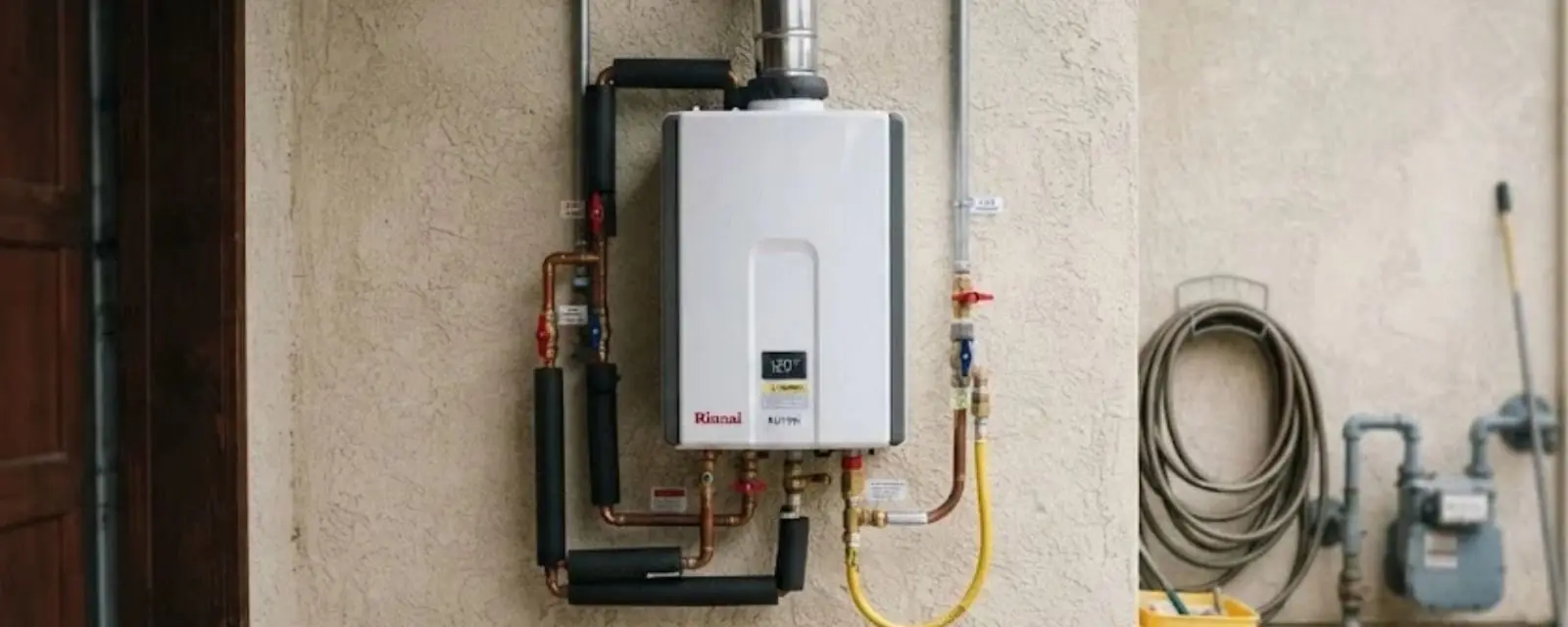
Tankless water heater ratings and reviews are useful when you read them for the right things. A star score often blends delivery, noise, reliability and customer service, and those are different questions. This guide shows what to look for in a review, which specs deserve your attention and how to match a model to a Chino Hills home. We do not rank brands here, because a ranking that is not backed by our own testing would be guesswork.
What reviewers actually measure
Independent testers usually look at flow rate, how steady the temperature stays and how long the water takes to arrive. Owner reviews add reliability, noise and service experience. A single angry review often describes an installation problem, not a product fault. Read for patterns across many reviews, not for one-off stories.
Check the date. A model that changed its design may have older reviews that no longer apply. Look for a recent set of comments from owners with a similar setup to yours.
The specs that matter
| Spec | What it tells you | Why it matters |
|---|---|---|
| Flow rate at a set temperature rise | How much hot water you get at once | Match to how many fixtures run together |
| Gas input or electrical load | The energy the unit needs | Gas line size and electrical capacity may need upgrades |
| Efficiency rating | How much fuel becomes heat | Affects running cost |
| Venting type | Condensing or non-condensing | Changes the vent pipe and drain needs |
| Warranty | Heat exchanger and parts coverage | Shows what the maker expects |
Flow depends on how warm the incoming water is. Chino Hills groundwater and treated surface water arrive at different temperatures through the year, so the same unit can deliver less hot water in winter than in summer. Ask the installer to size for the cold season.
What reviews rarely say
Installation decides a lot. A tankless unit often needs a bigger gas line, a new vent and sometimes an electrical outlet or a condensate drain. Reviews written by owners who needed none of that cannot predict your costs. Ask for a written scope before you compare prices.
Water quality matters too. Scale shortens the life of the heat exchanger, and a unit in a hard water area may need a softener or regular flushing. See water softener and filtration for how to test first.
Questions to ask a seller or installer
- Is the unit sized for my winter water temperature?
- Does my gas line need to be upgraded?
- What venting will be needed and where does the condensate drain?
- Who pulls the permit and schedules the inspection?
- What does the warranty cover, and does it require annual service?
- Will the price include the isolation valves for flushing?
Written answers beat verbal ones. A seller who hesitates on any of these is a signal.
Chino Hills requirements
The City of Chino Hills lists water heater replacement among the work that needs a permit, which applies to a tankless swap too. California Health and Safety Code section 19211 requires bracing for water heaters, and wall-mounted tankless units must be secured to the structure properly. Ask your installer how both will be handled.
The Department of Energy says tankless units typically last over 20 years, longer than storage tanks, which is a reason many homeowners accept the higher price.
Payback and what to expect
A tankless heater can lower energy use because it does not keep a tank hot all day. The saving varies with how much hot water your household uses. A larger household with high use may see more benefit than a one or two person home. Do not trust a payback promise without seeing the math for your own usage.
Compare the total installed cost, along with the unit price, and include maintenance. Our tankless water heater page explains the install in more detail.
Reading a quote
A good quote lists the model, the venting, the gas or electrical work, the permit and the haul-away of the old tank. If those lines are missing, ask. For coverage, see Chino plumbing coverage and our service area.
Red flags in reviews and sales pitches
Be careful when every review says the same thing in the same words. Be careful with a seller who promises a fixed payback period without asking how many people live in your home. Be careful with any claim that a unit never needs service. Every heater with a heat exchanger needs flushing at some point, and water quality sets how often.
A trustworthy source talks about tradeoffs. Tankless units give endless hot water in a small space, but they cost more to install, they need a larger gas line in many homes and they can deliver a brief cold burst when you turn the tap on a second time soon after.
Fit with your home's layout
Tankless heaters work best when they sit close to the fixtures that use the most hot water. A long run of pipe means a longer wait for hot water, and a unit far from the master bath can leave you waiting. A recirculation loop or a small buffer tank can fix this, though it adds cost.
Walk through the house with the installer and mark where hot water is used most. That conversation does more for your satisfaction than any review score.
Maintenance you will actually do
Reviews often praise a unit that was never serviced for a year or two and then complain when it fails. Plan the annual flush before you buy. Ask whether your model has isolation valves built in, because those make flushing a short job instead of a long one.
Frequently asked questions
They help if you read for patterns and check the dates. One review rarely tells you about the product. It may reflect the installation.
It depends on how many fixtures run at once and your winter water temperature. A plumber can calculate it.
Most need electricity for controls and ignition, even on gas. Ask about a backup option if outages concern you.
It depends on your household's hot water use and the installation cost. Ask for the full installed price.
Look for specifics about install date, model and problem. Vague praise and identical phrasing are warning signs.
A short buying checklist
Write down your household size, your peak hot water use and your gas line size. Collect two or three written quotes with the same scope. Check the permit plan and the warranty terms. Ask what annual service costs. Choose the installer you trust, since installation quality drives most of the long-term results.
For coverage, see our notes for Chino and the service area page.
Standards behind the ratings
Efficiency ratings follow U.S. Department of Energy test procedures, and installation follows the California Plumbing Code, which is based on the Uniform Plumbing Code (UPC). A seller who cannot name the rating standard behind a claim has not earned your trust.