
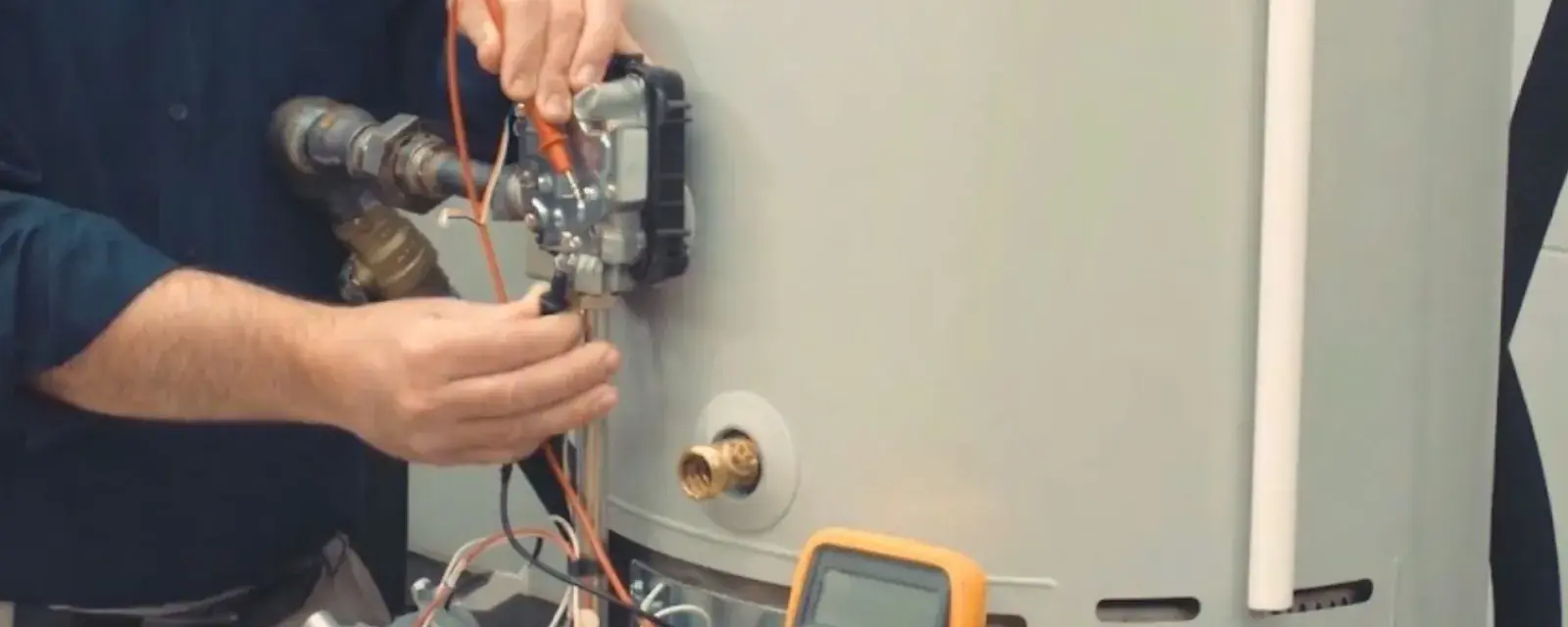
A water heater that pops, rumbles or bangs is usually telling you about sediment, pressure or flow. Popping and rumbling in a tank heater almost always point to sediment on the bottom, where trapped water boils under a layer of minerals. Banging in the pipes is often water hammer. A high-pitched whistle can mean a partly closed valve or a scaled element. Some noises are harmless, and some are early warnings, so it helps to know the difference.
What each sound usually means
| Sound | Likely cause | What to do |
|---|---|---|
| Popping or crackling | Sediment layer, water boiling under it | Flush the tank, consider replacement if old |
| Rumbling | Heavy sediment on the burner side or elements | Flush and inspect |
| Banging in pipes | Water hammer when valves close | Check pressure and arrestors |
| Hissing | Water on a hot element or burner, or a small leak | Look for leaks, call if you see water |
| Whistling or screeching | Partly closed valve or scale in a fitting | Check valves, descale |
| Ticking | Pipes expanding and cooling | Usually harmless |
Why sediment makes noise
Water carries dissolved minerals. When water heats, some of those minerals settle out and collect on the bottom of the tank. On a gas heater the burner sits under the sediment layer, so the metal can overheat and water trapped in the layer turns to steam bubbles, which produces popping. On an electric heater, scale coats the lower element, which shortens its life and adds noise.
Sediment also acts as insulation, so the heater runs longer to produce the same hot water. That raises the bill and wears the tank faster.
How to flush a tank heater
- Turn off power or set the gas control to pilot.
- Close the cold supply valve to the heater.
- Attach a hose to the drain valve and run it to a floor drain or outdoors.
- Open a hot tap in the house so air can enter.
- Open the drain valve and let the tank empty. Expect cloudy water at first.
- Briefly open the cold supply to stir the bottom, then drain again until the water runs clear.
- Close the drain valve, refill the tank with the hot tap open, then restore power or gas.
If the drain valve is plastic and sticks, stop. Forcing it can cause a leak. A plumber can replace it.
When noise is a warning to replace
A tank that has been popping for years and is past 10 years old may have a layer too thick to flush. The U.S. Department of Energy says storage tank heaters commonly last about 10 to 15 years. If the tank leaks at the seams or the bottom, replacement is the only fix. See water heater replacement for how a swap works.
A tankless unit makes different noises, such as a hum or a click from the flow sensor. A kettle sound inside a tankless unit usually means scale in the heat exchanger. Descaling helps.
Water hammer and what causes it
Water hammer is a bang in the pipes when a valve closes suddenly, such as a washing machine or dishwasher. The moving water stops quickly and slams into the closed valve. Causes include high pressure, loose pipes and missing air chambers. A plumber can install arrestors, secure the pipes or add a pressure regulator. Ask for a pressure test, since pressure over the normal range can shorten the life of the heater and other appliances.
Chino Hills heaters and hillside garages
For Chino Hills, the City of Chino Hills lists water heater replacement among the work that needs a permit, so a replacement is not a simple swap. State law under Health and Safety Code section 19211 requires bracing for new and replacement water heaters. Noisy garage heaters in older homes are common candidates for replacement, and the brace should be checked during the visit.
Water in Chino Hills comes from several sources, including treated surface water and groundwater, so mineral buildup differs by address. A yearly flush is cheap insurance wherever you live.
A yearly routine
Flush the tank once a year. Test the relief valve by lifting the lever briefly with a bucket under the discharge pipe. Look for rust and moisture around the base and fittings. Replace the anode rod if your plumber recommends it, since that part protects the tank from corrosion. For service details, see Chino plumbing coverage and our service area.
Noise from electric and tankless heaters
Electric tank heaters make a sizzling or humming sound when scale coats a heating element. Replacing the element and flushing the tank usually quiets it. A loud hum can also mean a loose element or a wiring issue, so turn off the breaker and call if the noise comes with tripped breakers.
Tankless heaters hum with their fans and click when the igniter fires. A louder kettle sound or a bang on ignition points to scale or a venting issue. Descaling the heat exchanger and checking the vent clears most of those.
Pressure, temperature and the relief valve
A relief valve that drips or hisses is not a noise to ignore. It opens when pressure or temperature goes too high, and a failing thermostat, a closed system or thermal expansion can cause it. If it discharges often, a plumber may recommend an expansion tank or a pressure regulator. Never cap the valve or the discharge pipe, since that removes the safety it provides.
What to tell the plumber
Describe the sound, when it happens and how long it has been going on. Say whether the heater is gas or electric, how old it is and whether you have flushed it. Write down any error lights or codes. A plumber who gets these details can often guess the cause before arriving, and the visit is faster.
Also mention changes around the same time, such as a new dishwasher, a recent repair or a drop in hot water. Those clues point to pressure or flow problems that are not the heater itself.
Frequently asked questions
Usually it is sediment, which is a maintenance issue. If you see water leaking, smell gas or notice the relief valve discharging, shut it off and call.
Many people do. If the drain valve will not open or the water does not run clear, call a plumber.
That is water hammer. A plumber can add arrestors or adjust the pressure.
Once a year is a common recommendation, and the manual for your model will say.
A new tank starts quiet, and sediment returns over time. A yearly flush keeps it that way.
When to call right away
Call a plumber at once if you smell gas, see water leaking from the tank, find rust colored water coming from the hot taps, or notice the relief valve discharging steadily. Turn off the gas or power and close the cold supply while you wait. A noisy but otherwise normal heater can usually wait for a planned visit.
Standards for relief valves and safety
Temperature and pressure relief valves are a safety requirement under the California Plumbing Code, which is based on the Uniform Plumbing Code (UPC), so never cap or plug one. The U.S. Department of Energy offers guidance on flushing and maintaining storage tank heaters.