
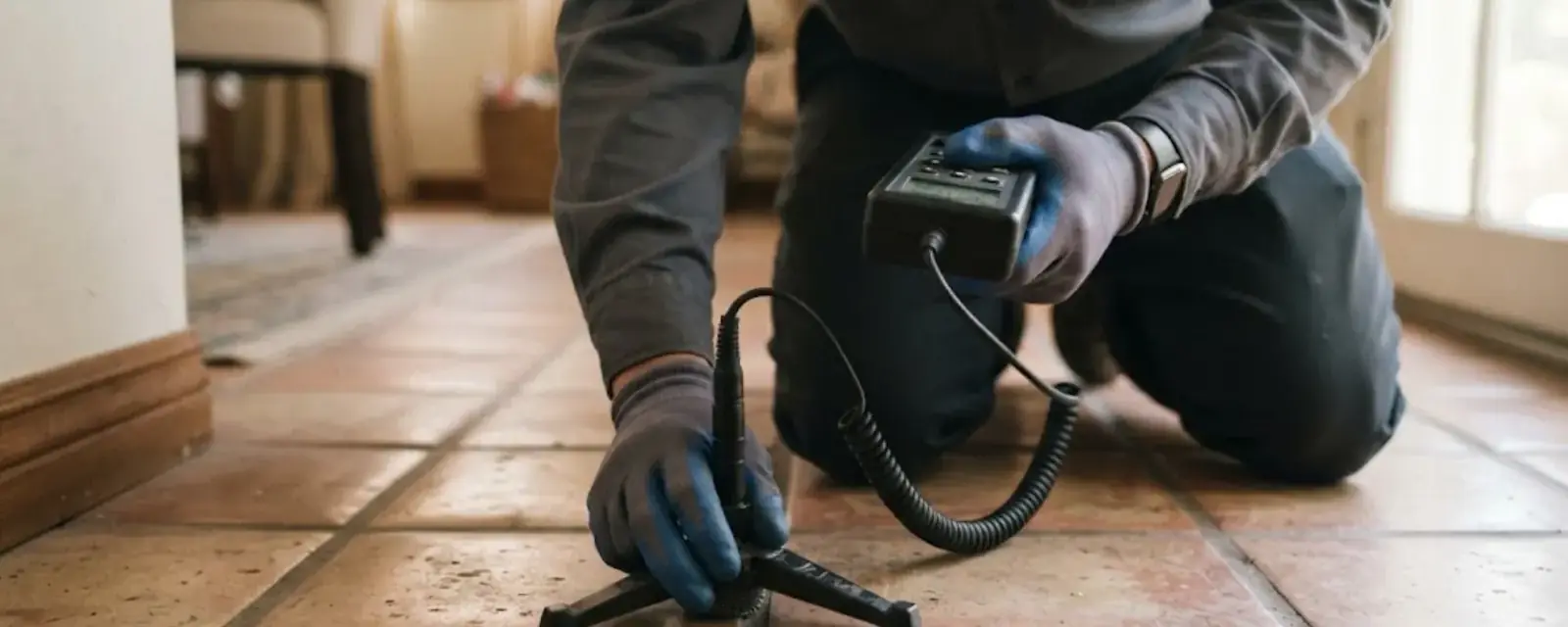
If your water meter keeps moving when every fixture is off, water is escaping somewhere between the meter and your home, or inside it. The fix is a short sequence of tests that narrows the leak to the toilet, the irrigation, the house lines or the service line. This guide shows the steps in order, and explains what to do about a high bill while you track it down.
Read the meter correctly
Open the meter box lid and look for the low flow indicator, a small triangle, star or dial that spins with even a tiny flow. The main dial counts the total volume. Write down the reading, wait 30 minutes with everything off, and check again. A changed number confirms a leak.
Make sure no one uses water during the test. Turn off the ice maker and the washing machine, and stop the irrigation controller.
Narrow it down in order
- Check the toiletsAdd a few drops of food coloring to each tank and wait 15 minutes without flushing. Color in the bowl means a leaking flapper.
- Check outdoor faucets and hosesLook for drips at hose bibs and at hoses left connected.
- Check irrigationTurn off the system and watch the meter. A zone valve that sticks open is a common cause.
- Close the main house valveIf the meter stops, the leak is inside the house. If it keeps moving, the leak is outside, between the meter and the house.
- Check the water heater and softenerLook for a relief valve that drips or a leaking drain.
- Call a plumber for hidden leaksSlab, wall and underground leaks need equipment to find.
The usual suspects
| Source | How to spot it |
|---|---|
| Toilet flapper | Food coloring test, hissing sound |
| Dripping faucet or shower | Visible drip, stained fixtures |
| Irrigation valve or sprinkler head | Wet patches, meter moves with the system off |
| Water heater relief valve | Water at the discharge pipe |
| Slab or wall leak | Warm floors, damp walls, sound of running water |
| Service line leak | Wet ground or a green strip between meter and house |
How much can a leak cost
The U.S. Environmental Protection Agency says household leaks can waste nearly 10,000 gallons of water a year, and about 10 percent of homes have leaks that waste 90 gallons or more per day. A running toilet alone can waste about 200 gallons a day. Even small leaks add up on a bill, so it is worth acting on the first sign.
What to do about a high bill
Compare the bill with earlier months and with your usage. Read the meter yourself to confirm the bill is accurate. If the leak turns out to be inside the home, ask your water provider whether they offer any adjustment for a repaired leak. Policies vary, and some require proof of repair, so keep your plumber's invoice and photos.
Do not wait for the next bill to confirm the leak is fixed. Check the meter again after the repair.
Chino Hills water and your bill
The City of Chino Hills explains on its water quality page that it provides water from several sources, including treated surface water and groundwater. Your meter and billing come from your water provider, which depends on your address, so confirm who sends your bill before calling about an adjustment.
Many Chino Hills homes were built after the 1982 Specific Plan, and original supply lines and fixtures are decades old, so aging valves and flappers are common leak sources.
When the leak is underground or in the slab
If the main valve test shows the leak is inside the house, and no fixture is at fault, the leak may be in a wall or under the slab. Warm floors and the sound of running water are clues.
See slab leak repair for what happens next. If the leak is in the line from the meter to the house, a plumber can locate it and repair or replace that section. For coverage, see Chino plumbing coverage and our service area.
Fixing the common causes yourself
A leaking toilet flapper is a cheap part and a quick swap. A dripping faucet needs a new cartridge or washer. A stuck irrigation valve may need a new diaphragm or solenoid. A relief valve that drips can signal high pressure, so have a plumber check pressure before replacing it.
If you tackle these yourself, check the meter again after each fix. The moving dial tells you whether you found the leak.
Irrigation leaks are easy to miss
Sprinkler systems often run early in the morning when no one is watching. A cracked head, a broken lateral or a valve that sticks open can waste a lot of water. Run each zone manually and walk the yard, looking for soggy patches and geysers. Shut off the system at the controller and the supply valve if you find damage, and ask your irrigation contractor to repair it.
Install a simple check habit
Read the meter on the first of each month and write it down. A jump that does not match your usage is an early signal. Learn where your main shutoff is and test it twice a year so it does not seize. If you leave for a trip, close the main valve and check the meter when you return.
Smart leak sensors under sinks and near the water heater give an early alert, and some systems shut the water off automatically. A plumber can install a shutoff on the main line.
Frequently asked questions
Water is flowing somewhere. A toilet, irrigation valve or hidden leak is the usual cause.
Turn everything off, record the reading, wait 30 minutes and read it again.
Some offer adjustments with proof of repair. Ask your provider about its policy.
No. Irrigation, guests and seasonal use also raise it. The meter test tells you.
Usually the homeowner. Confirm with your water provider.
A word on leak adjustments
If your provider offers a bill adjustment after a repair, they usually ask for the repair invoice and the date. Keep the plumber's written finding and a photo of the meter before and after. Ask about the process early, since some providers have deadlines.
What the EPA says
The U.S. Environmental Protection Agency says household leaks can waste nearly 10,000 gallons of water a year, and its WaterSense program labels fixtures that save water. Repairs follow the California Plumbing Code, which is based on the Uniform Plumbing Code (UPC).